Bollywood and Russia: A New Era in Film Production
"We love Indian cinema," Russian President Vladimir Putin recently stated, noting that there is even a TV channel in Russia broadcasting Indian films 24/7. Anyone who has seen Russian audiences dancing to "Awaara" or cheering for "Disco Dancer" knows that this is not nostalgia. It is muscle memory.
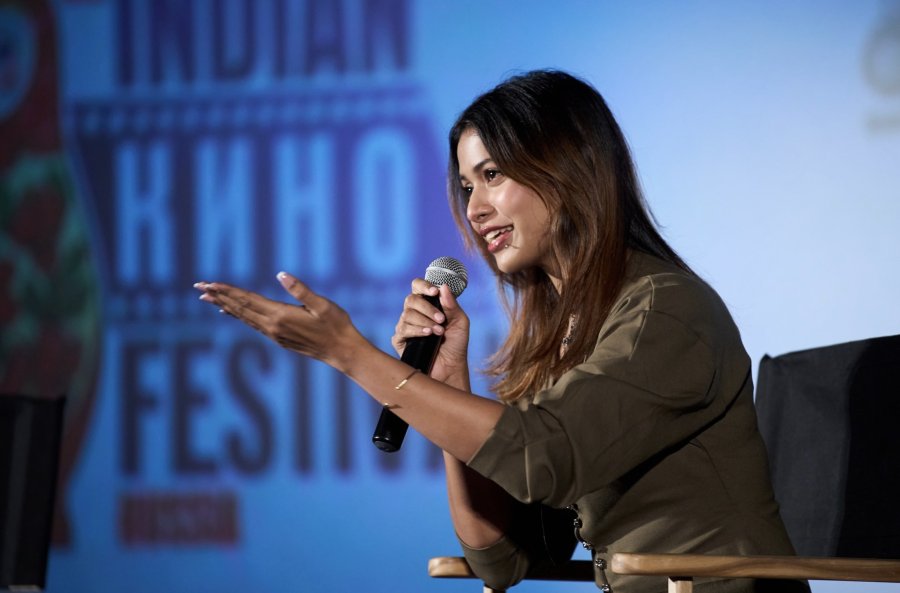
In October, the international festival, organized by the Embassy of India in Moscow together with the Ministry of Culture of Russia, the Ministry of Information and Broadcasting of India, the Government of Moscow, the Republic of Tatarstan, NFDC, ICCR, and partners, was held during the year of the 25th anniversary of the Russian-Indian strategic partnership. The film festival organizers also built upon the success of WAVES, an Indian media and innovation initiative aimed at promoting intellectual property, collaboration, and cross-border investment. The Embassy of India even organized the arrival of WAVES Bazaar in Moscow—an initiative that turns words into action, turning film festival conversations into real projects of co-production, training, and distribution.
Why Now: A Partnership Ready for the Screen
Despite India and Russia being long-time allies, the two countries have not collaborated as actively in film production and distribution. Previously, for various reasons, many potential Russian-Indian film projects were put on hold. The mission of the recent large-scale film festival was to provide momentum to the Russian-Indian partnership in cinema.
Russia is a filmmaker's paradise, the world's largest country with locations suitable for any story. Moscow is ready for filming: there are numerous film crews and professional teams, equipment, studios, and transport and logistics infrastructure. Thanks to "Moskino," producers can receive a 30% cash rebate and compensation for additional costs (up to 15%) through local hospitality and services. Furthermore, in 2019, India and Russia signed an Agreement on Audio-Visual Co-Production, granting joint projects ‘national film’ status in both countries (this allows for increased financing, improved film quality, and expanded geographic reach). Thus, the Russian-Indian partnership in the film industry is gaining tangible practical significance.
Ambassador's Speech: Technology, Talent, and a Wider Stage
His Excellency Mr. Vinay Kumar, Ambassador Extraordinary and Plenipotentiary of the Republic of India to the Russian Federation, spoke from the heart. In the era of silent cinema, plots did not need translation, as emotions spoke for themselves. Then, sound divided audiences by language. Today, thanks to dubbing, through artificial intelligence and other technologies, these barriers have disappeared again. The Ambassador noted that currently, the Prime Minister of India can address the nation in Hindi, and—within an hour— the same speech becomes available in all UN languages, including Russian. If speeches and stories can spread so quickly, why can’t the same happen with films?
And it is not just about cinema on the big screen, but also about content on media platforms, documentaries, and short films. In these genres, Russian studios (including Gazprom-Media) can collaborate with a vast pool of young Indian talent.
The Universal Language of Cinema
Madhur Kankana Roy, Director of the Jawaharlal Nehru Cultural Centre at the Embassy of India in Russia, set the tone by recalling the words of the famous director A.A. Tarkovsky: "Films recreate life—its movement, contradictions, and conflict, and emotions are universal. A mother's grief or a friend's loyalty are felt the same in Mumbai and in Moscow." At this year's festival, special attention was paid to issues of intellectual property, training, and industry partnership. The Indian delegation included Ms. Supriya Naik, Ms. Gitika Aggarwal, Ms. Chhaya Kadam, Mr. Himanshu Mehra, Mr. Sarfaraz Alam, Mr. Sheel Kumar, Mr. Pranav Sharma, Mr. Aseem Prakash Bajaj, Mr. Yusuf Mehmood, Mr. Panda Ji, Mr. Anshul Chaturvedi, Mr. Sudhir Mishra, and other filmmakers, many of whom traveled to Kazan for the TIME business forum.
Sarfaraz Alam: A Bridge Between Russia and India
If anyone embodies the connection between India and Russia through cinema, it is Sarfaraz Alam. He came to Russia in 1996 to study medicine, worked in Indian healthcare, launched the first Moscow–Goa charter flights, and then followed his true calling—film production. After graduating from the New York Film Academy, he filmed "Tears of Nandigram" in India, but in his words, "Russia was my first love."
He brought such Indian blockbusters as "Sardar Udham," "Jugjugg Jeeyo," and "Runway 34" to Russian cinemas and now leads the co-productions that will define the new decade. A current example of this is the film "Samotsvety" (Gems)—the first official Indian-Russian co-production under the bilateral agreement on cooperation in the field of cinema.
Next is the film "Karova" ("COW"), supported by the Ministry of Culture of Russia, dedicated to the attitudes of different cultures toward the cow (a symbol of motherhood in India). Following that, Mr. Alam filmed "Razgrom" (The Rout), set for release in 2026, the plot of which features a Russian badminton player traveling to India.
Mr. Alam is convinced: "Russians love Indian cinema. If you ask what Indian cinema lacks, the answer is straightforward: it is not a lack of love, but a lack of distribution and proper marketing. The audience is ready; Indian producers must invest more and organize appropriate campaigns." According to the Indian filmmaker, "festivals like this bring the right people together in one room, and therein lies their special value."
Dr. Tahzeen: The Man Who Set the Machine in Motion
A neurosurgeon by training and a distributor by calling, Dr. Tahzeen, owner of the Indian Cinema company in Russia, has been promoting Indian films on Russian screens for over ten years. "Cinema is not just entertainment," says Mr. Tahzeen. "It is a means of cultural exchange and strengthening friendship between nations." When no one else continued the legacy of Indo-Soviet cinematography, Dr. Tahzeen took it upon himself: "Like most Indians, I have always loved our cinema. When no one supported the idea, I decided to do it myself."
Dr. Tahzeen believes that the love for Bollywood among Soviet citizens stemmed from eternal values—kindness, family, and traditions. "These themes never go out of style," Tahzeen asserts. "Russia is turning back to its traditional roots, and that is exactly what Indian cinema celebrates. The magic will return."
Thanks to the company Indian Cinema, Dr. Tahzeen now offers Indian films to major chains such as CinemaPark and Cinema 5, as well as digital platforms. "The Indian diaspora," Mr. Tahzeen adds, "plays a key role in holding festivals and cultural events, while institutions like the Embassy and the J. Nehru Cultural Centre help strengthen Russian-Indian ties." "We have returned to what we once were," Dr. Tahzeen says with a smile, "only now this machine works in both directions."
A Director Tips His Hat: Sudhir Mishra
"I am not just a filmmaker—I am a historian," says Mr. Sudhir Mishra, whose films ("Khoya Khoya Chand," "Chameli," and others) have always been complex stories about people, rather than just plots. Mr. Mishra spoke of Eisenstein, Tarkovsky, and Klimov, and how the iconic Soviet films "The Mirror" and "Come and See" shaped his vision. "Indian theater is incomplete without Chekhov," Mr. Mishra remarks. "Presenting Khoya Khoya Chand to the Russian audience was not just a screening. It was a dialogue. Films are culture, and understanding each other's cultures brings people together."
Indian Cinema Stars Speak Out
Supriya Naik, the lead actress in the film "Pushkara," addressed the new generation: "We have moved beyond language and boundaries. I support the girls back home who dare to dream big."
Chhaya Kadam, lead actress of the film "Snow Flower," visiting Moscow for the second time, was moved by the audience's presence and their Q&A session: "I had the feeling that I was watching my own film as if I were making a movie for the first time." "Invite us," Ms. Kadam said, "and we will share our stories here in Russia. Let's build meaningful dialogue."
A Legislator from Kursk Remembers
Mr. Abhay Kumar Singh, a parliamentarian from Kursk, recalls a time when Bollywood rivaled Hollywood in Russia—in terms of budget, quality, and sales volume. In the 1990s, public attention was fixed on the West; now, with the focus shifted to the South and East, cultural ties between Russia and India are being revived. According to Mr. Singh, "Russians and Indians are emotionally similar to one another—for example, we are sentimental and have deep feelings for our relatives and friends. Show modern youth all the best that Russia and India have to offer, and the flame will ignite with new strength."
Speaking about the Indian diaspora, Mr. Singh asserts that "every Indian abroad is an ambassador—in their manner of behavior, in work, and in culture. Indian compatriots abroad help maintain ties at both the micro and macro levels."
Current and Future Films
This year, the festival presented a large selection of Indian films:
· "Snow Flower" (2024) – a drama in Marathi about a young woman caught between two cultures. The film's key themes are family, love, and unity.
· "Khoya Khoya Chand" (2007) – a Hindi film set during the golden age of Bollywood, telling a story of glamour, ambition, and broken hearts.
· "Milan Talkies" (2019) – a Hindi melodrama about a small town where dreams, love, and the magic of cinema collide.
· "Pushkara" (2023) – a film from the Odia film studio, telling the story of a vanishing tradition and an unusual love story based on faith and change.
· "Samotsvety" (Gems) (2025) – the first official Indian-Russian co-production in the Russian language, about a family that travels to India to rediscover and strengthen their family bonds.
And the story continues…
On the closing day of the festival, the Deputy Chief of Mission of India to Russia, Mr. Nikhilesh Giri, presented awards and commemorative gifts to Indian and Russian filmmakers, including the teams behind the films "Samotsvety" (Gems) and "Snow Flower." Mr. Giri concluded his speech with a simple assurance: the embassy will exert every effort to help bring these and future film projects to life. And the creators of the films? They did what creative people do best—they made us experience a vast range of feelings and emotions.
1. If you are an Indian director, plan your next shoot in Moscow—favorable conditions and high-class infrastructure await you. And please, work with local production companies—they know all the nuances and possess the necessary experience and knowledge.
2. If you are a Russian producer, explore the Indian film market, for there is no limit to the talent and stories it offers.
3. And if you are part of the Indian diaspora in Russia, support the exchange of views—invite your Russian friends to an Indian film, and your Indian friends to a Russian one. If you have a story to tell, start filming; at festivals like the one held in Russia this October, new stars are born.
Regardless of the city or the plot, hearts beat in a single rhythm. The credits haven't started yet—the lights have just gone down.
Other Events