The Development of the Aerospace Industry in India and Russian-Indian Space Cooperation (On the 65th Anniversary of Yuri Gagarin’s Flight)
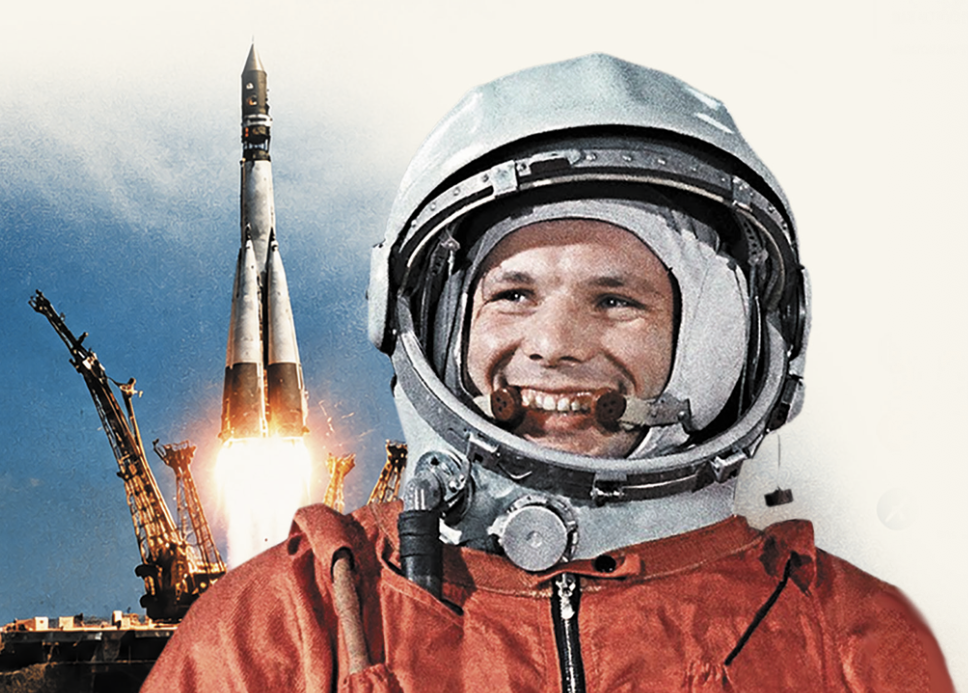
On April 12, 1961, Yuri Gagarin opened the path to space for humanity. Seven months later, on November 29, the planet's first cosmonaut landed at the Delhi airport, marking the start of his South Asian tour, which included Lucknow, Bombay, Calcutta, and Hyderabad. This laid the symbolic foundation for the space dialogue between the two nations, which over the past 65 years has evolved from isolated launches to plans for the technological integration of national orbital programs. Today, according to Russia's Ambassador to India Denis Alipov, this partnership is built around three flagship areas: satellite navigation, manned spaceflight programs, and rocket engine manufacturing. The scope of these three topics defines the narrative logic of this article.
The history of cooperation in satellite navigation dates back half a century. On April 19, 1975, a Soviet Kosmos-3M rocket launched from the Kapustin Yar cosmodrome, placing India's first satellite, Aryabhata, into orbit. The satellite was fully designed and built by the Indian Space Research Organisation (ISRO), while the USSR provided only the carrier. Following this, two more spacecraft, Bhaskara-I and Bhaskara-II, were launched free of charge. These three launches essentially paved India's way into the space club. Today, the Indian satellite program has not only caught up with world leaders but has also set a record: in 2017, a single PSLV rocket deployed 104 satellites in a single launch.
Moreover, by the early 2020s, India had deployed NavIC, its own regional navigation satellite system, which covers the country's territory and adjacent areas. Russia, for its part, keeps pace with the global GLONASS system, whose signals are accessible anywhere on Earth. Today, the convergence of these two navigation systems is reaching a fundamentally new level. The nations are negotiating the reciprocal placement of ground stations: a Russian GLONASS station will be built in Bengaluru, and an Indian NavIC station will be set up in Novosibirsk..
In order to understand the importance of this step, one need only look at how satellite navigation works. A satellite transmits a radio signal to Earth, and a telephone, by receiving signals from several such satellites, calculates its coordinates. However, to achieve accuracy down to a few meters, someone on the ground must continuously track the position of each satellite and correct its atomic clocks, which requires a network of ground stations. Consequently, the greater the number of such stations, the more precise the navigation becomes. In this regard, Ambassador Alipov emphasized: "Work is underway on the reciprocal, parity-based deployment of ground measurement collection stations." Behind this technical phrasing lies a high level of trust: the parties are essentially sharing the "eyes and ears" of their navigation systems with one another, and such cooperation strengthens the technological sovereignty of both nations.
While satellite navigation developed largely due to India's own efforts, cooperation between the two nations manifested most visibly in the field of manned spaceflight. For a long time, the flight of Rakesh Sharma remained its primary symbol. On April 3, 1984, he became the first Indian in space, launching aboard the Soyuz T-11 spacecraft under the Interkosmos program. This Soviet initiative in the 1970s and 1980s allowed citizens from over a dozen countries, from Czechoslovakia to Cuba, to work in orbit. After spending nearly eight days aboard the Salyut-7 station, Sharma became a national hero in India and was awarded the title of Hero of the Soviet Union in the USSR. When asked by Indira Gandhi how India looked from space, he declared, "The best in the world."
However, even back then, the Indian space program was preparing for independent breakthroughs. Thanks to these efforts, the Chandrayaan-1 probe succeeded in discovering water ice on the Moon in 2008. Later, in August 2023, Chandrayaan-3 achieved history's first soft landing near the lunar South Pole — the very region containing the previously discovered accumulations of water ice, which could provide fuel and oxygen for future deep-space expeditions. Moreover, this means subsequent lunar missions will be able to utilize local resources rather than carrying everything from Earth. Additionally, in 2014, the Mangalyaan spacecraft entered Mars orbit on its very first attempt; prior to this, no country had ever achieved such success in its debut Mars mission. With this track record, India joined the club of great spacefaring nations as an equal partner.
Today, Russian-Indian cooperation in manned spaceflight is evolving into a new format. In 2020, four Indian Air Force pilots arrived at the Yuri Gagarin Cosmonaut Training Center in Star City near Moscow to begin training as "Gaganauts" (the term used in India for their future astronauts). Furthermore, Russian specialists are assisting their Indian counterparts with spacecraft systems design, as well as candidate selection and medical screening. In addition, Russia is developing astronaut rescue systems and flight gear. For instance, in 2022, Glavkosmos, a subsidiary of Roscosmos, delivered spacesuits, shock-absorbing seats, and custom-molded couch liners to India.
In parallel, a far more ambitious project is taking shape. In December 2025, during President Vladimir Putin's visit to New Delhi, Russia announced that it would position the future Russian Orbital Station (ROS) into an orbit with a 51.6-degree inclination. India chose this exact same inclination for its own national space station, the Bharatiya Antariksh Station (BAS). As First Deputy Prime Minister Denis Manturov explained: "This will open up opportunities for cooperation—joint scientific and technical experiments, as well as joint expeditions." An inclination of 51.6 degrees is a decades-proven standard for manned spaceflight; all Soviet orbital stations operated on it, and the International Space Station (ISS) utilizes it today. Such an orbit is ideal for launches from both the Russian Baikonur Cosmodrome and the Indian Sriharikota Spaceport. When the ISS is decommissioned after 2030, these two national stations will be able to interact as orbital neighbors, exchanging crews and scientific data.
Deepening cooperation in human spaceflight is paving the way for a third flagship sector: rocket engine manufacturing. Partnership in this field dates back to 2007, when ISRO and Roscosmos signed an agreement to jointly execute the Chandrayaan-2 mission, under which the Russian side was tasked with developing the lander module. Although Russia later withdrew from the project and India went on to build the landing craft independently, the scientific and technical groundwork established during the joint design phase played a significant role in the ultimate success of the mission — an upgraded version of which made a triumphant landing on the Moon in 2023.
Today, as India designs its national orbital station and Roscosmos prepares to deploy the Russian Orbital Station (ROS), the need for shared expertise in engine manufacturing and related fields continues to grow. India remains highly interested in Russian liquid-propellant rocket engine designs, a sector where Russia has traditionally maintained a leading global position. It was precisely for this reason that in December 2025, the two sides agreed to grant India the rights for the licensed production of the advanced RD-191M rocket engine.
To better understand the significance of this milestone, it is helpful to look at the technology behind this designation. Rocket engines are categorized into various types based on the propellants they use. The most complex are cryogenic engines, which run on liquid hydrogen and require cooling to ultra-low temperatures. The RD-191M represents the next frontier — a semi-cryogenic engine that utilizes a highly refined kerosene and liquid oxygen propellant combination, making it significantly simpler and more reliable to operate. Integrating this engine into India’s most powerful launch vehicle, the LVM3, will nearly double its payload capacity, boosting it from the current 4.2 tons to between 6.5 and 7 tons. Crucially, rather than receiving finished off-the-shelf units, India is securing the rights to independently design, manufacture, and test these engines domestically. This approach aligns perfectly with New Delhi's "Make in India" government initiative, which aims to cultivate and expand national manufacturing capabilities.
Consequently, in the 65 years since Yuri Gagarin promised an enthusiastic crowd on the streets of Delhi that an Indian astronaut would eventually journey into space, the Russian-Indian space partnership has charted an extraordinary course. It has evolved from the launch of India's first satellite aboard a Soviet rocket into the joint production of cutting-edge rocket engines. At every milestone, this cooperation has not merely expanded in volume but has fundamentally transformed in character. Today, it stands as a partnership between two equal powers co-authoring the technologies of tomorrow. The three strategic pillars outlined by Ambassador Alipov — navigation, human spaceflight, and engine manufacturing — form the bedrock of bilateral space cooperation, proving that the space sector remains one of the most resilient and forward-looking drivers of the Russian-Indian relationship.