Hindi in Russia: Prospects and Challenges
हिंदी भारतीय संस्कृति की आत्मा है।
“Hindi is the soul of Indian culture.”
— Kamalapati Tripathi, writer and Chief Minister of Uttar Pradesh (1969–1970)
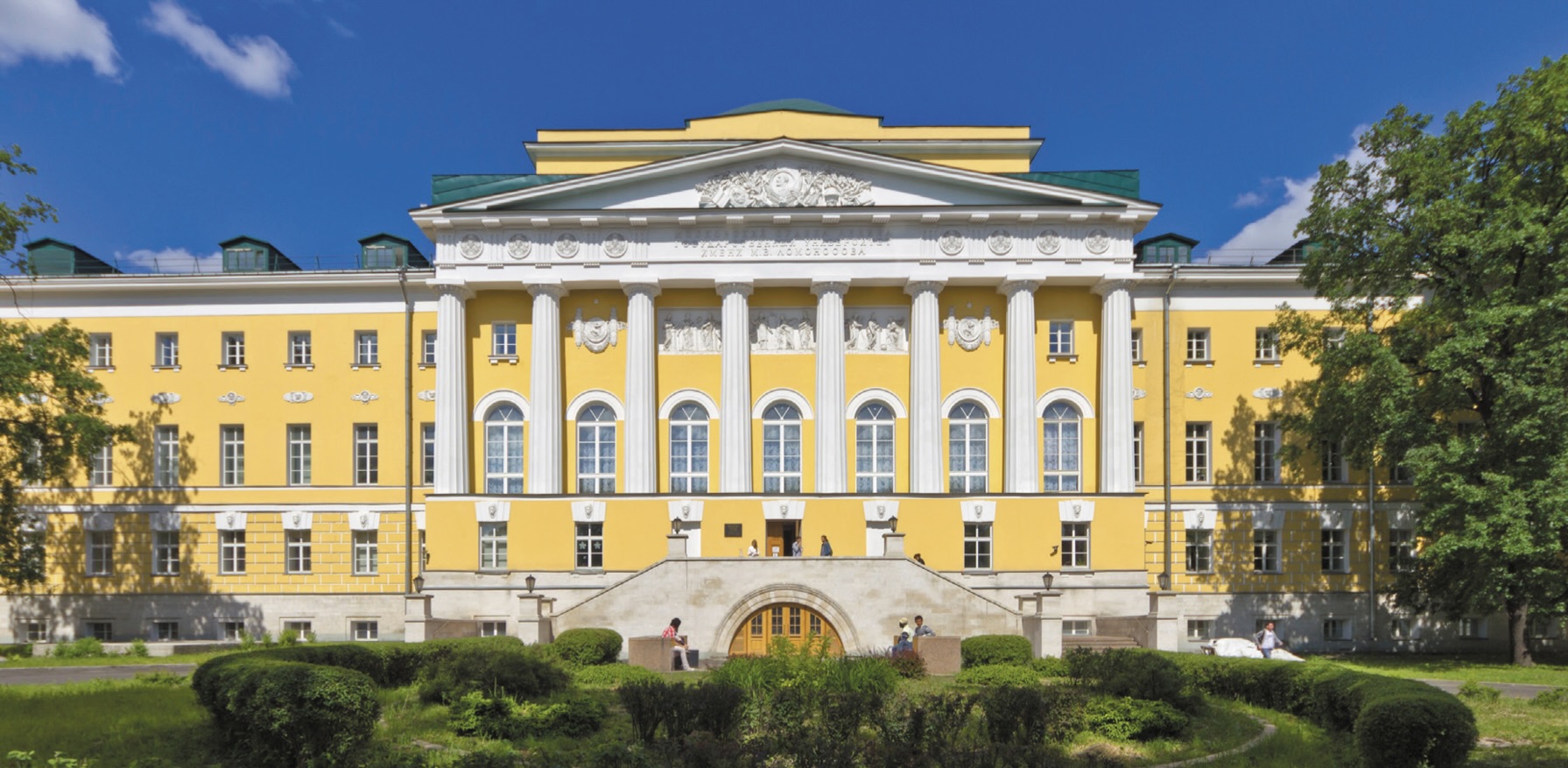
The interest of Russians in the Hindi language, spoken today by more than half a billion people worldwide, has a long history. Hindi began to be taught at the Moscow Institute of Oriental Studies as early as 1947, and today students study it at leading Russian universities such as MGIMO University, the Russian State University for the Humanities (RSUH), the Institute of Asian and African Studies of Moscow State University, Moscow State Linguistic University, Saint Petersburg State University, and Kazan Federal University.
At the secondary education level, the best-known project for teaching India’s national language was the historic School No. 19 named after V.G. Belinsky, founded in the 19th century and offering Hindi courses for schoolchildren since 1961 (unfortunately, it ceased to exist several years ago). In Saint Petersburg, School No. 653 with advanced studies in Hindi and English still operates; many of its graduates continue careers in Indology by enrolling in Oriental Studies faculties across the country. The school also hosts a classical Indian Kuchipudi dance studio led by Hindi teacher Yulia Vladimirovna Beshchuk.
Students studying Hindi have opportunities to undertake internships in India, as Russian and Indian universities have signed cooperation memorandums. Jawaharlal Nehru University (JNU) in Delhi and the Central Hindi Institute (Kendriya Hindi Sansthan) in Agra actively cooperate with Russian institutions. The latter also offers Hindi courses for anyone interested, which have already been completed by dozens of Russians of various ages and professions. For those simply interested in Indian culture and wishing to communicate with Indian colleagues, partners, and friends in their native language, numerous language courses are available. Hindi is also taught at the Jawaharlal Nehru Cultural Centre attached to the Embassy of India.
What, then, can be said about the real situation of Hindi in Russia and the prospects for its development? On September 6 of last year, Deputy Minister of Science and Higher Education of the Russian Federation Konstantin Mogilevsky noted growing interest in studying Hindi among Russian students. “In Moscow alone there are MGIMO, RSUH, the Institute of Asian and African Studies of Moscow State University, and Moscow State Linguistic University. Enrollment in Hindi programs is increasing; groups are becoming two or three times larger,” he stated (https://tass.ru/obschestvo/24981717). At the same time, there are no statistics on the total number of Russians who speak Hindi or wish to learn it. Nor have sociological studies been conducted to determine the demand for Hindi-speaking specialists in the labor market. At present, we can rely primarily on personal experience in education and subjective assessments within business and translation circles. Specifically, regarding enrollment in university Hindi programs — both as a primary specialization (linguistics, intercultural communication, translation studies, philology, etc., leading to qualifications as translators or teachers) and as a key secondary specialization (regional studies, international journalism, etc.) — there is indeed demand among applicants. However, it cannot be compared to the number wishing to study the most widespread European languages such as English, French, or Spanish. It also lags behind interest in Chinese and Arabic. During university open-house events, typically no more than 5–10% of applicants express interest in joining Hindi groups, especially given the existence of ten or more other foreign language options. On the other hand, the range of courses offered by universities is rather limited: from one or two small language groups (averaging 10 students each) per year to the same one or two groups, with intake taking place only once every few years (until the previous cohort of students has completed their studies). In our view, this is connected with several factors.
First, while the formula “demand creates supply” is true, in education the reverse is equally valid: “supply stimulates demand.” The average consumer becomes accustomed to a certain set of offerings and searches specifically for them, paying little attention to alternatives. To change this mindset, it is not enough merely to place a new product on the shelf; one must actively draw attention to it through campaigns and promotion. If generations within a family studied English or French, parents themselves will encourage applicants to choose one of those languages, and their attention may never turn to Hindi, mistakenly perceived as an exotic hobby. Increasing the number of Hindi learners and their visibility in the educational sphere is what can truly stimulate broader interest among future applicants.
Secondly, the prospects for the demand for Hindi in the labour market remain unclear. During the Soviet era, Hindi-speaking specialists could be broadly divided into four (often overlapping) groups: (1) classical philologists and Indologists from other disciplines, for whom the study of Indian languages was necessary for conducting research and translating classical and modern literature; (2) diplomats (a relatively small pool of specialists for whom Hindi was not a priority due to constant transfers and relocations from country to country); (3) journalists; and (4) translators themselves in various fields, predominantly in the military-technical sector. The vast majority of them were educated under the state-sponsored system and were immediately assigned to work in their relevant specialism upon graduation. In the 1990s, demand for Hindi-speaking specialists declined, partly because Indian businesses operating internationally primarily used English as the language of communication. Broadly speaking, this situation continues today, although in recent years the government led by Prime Minister Narendra Modi has taken significant steps toward restoring Hindi to its rightful place in India’s political and economic life. The use of Hindi is increasingly becoming a symbol of prestige and commitment to the ideals of Indian civilization.
Since 2014, the role of the national language in government organizations has expanded, and both National Hindi Day (September 14) and World Hindi Day (January 10) receive official support. Union Minister of State for Science and Technology Jitendra Singh has noted that “Prime Minister Shri Narendra Modi’s efforts to promote Hindi worldwide have inspired everyone and increased Hindi’s popularity on the global stage.” Nevertheless, India still has considerable work ahead in introducing Hindi more actively into the international business environment, which remains predominantly English-speaking.
A positive development is the growth of Russian-Indian ties at the level of small and medium-sized enterprises, whose representatives, unlike civil servants and employees of large international corporations, often prefer their native language to English. In this context, knowledge of Hindi can be useful not only to translators but also to Russian businesspeople themselves as they establish contacts with partners in India. Finally, over the past two years, a new socio-economic factor has emerged that creates opportunities for the use of Indian languages: the influx of Indian migrant workers to Russia to work in heavy and light industry, agriculture and the service sector. Cooperation in this area opens up new prospects for Hindi translators and teachers, as well as for teachers of Russian as a foreign language. In our view, educational institutions offering language courses should pay greater attention to explaining to prospective students the realities of cooperation between the Russian Federation and the Republic of India at various levels, as described above, so that the choice of Hindi is an informed one and linked to a clear vision of their future as specialists in Indian studies.
Third, according to our observations, beginning students often approach Hindi with the illusion that it is easy, only to become disappointed when confronted with authentic usage or difficult grammatical structures. Future students must understand from the outset what awaits them in the process of mastering Hindi and possess strong motivation to persevere. Hindi’s rich phonetic system — containing a wider range of sounds than Russian or English — the complex writing system of aksharas (letters), matras (vowel signs), and ligatures in the Devanagari script, the unfamiliar logic of phrase and sentence construction, and extensive synonymy drawing from Sanskrit, Persian, Arabic, Turkic, and other lexical sources can all overwhelm learners. Even for the concept of “love,” Hindi offers at least a dozen words, including prem, pyaar, muhabbat, sneh, anuraag, and ishq. Persistence, gradual progress, and consistent daily work without interruption — these are the principles students must follow throughout their years of study. Without genuine love and deep interest in the language, it is difficult to see the journey through to the end, and one must realize this from the very beginning.
Thirdly, according to our observations, beginning to learn Hindi is often accompanied by the illusion that it is simple, followed by disappointment upon encountering the language in real-life use or complex grammatical structures. Prospective students must be aware from the outset of what lies ahead in the process of mastering Hindi, and possess strong motivation to see the task through to the end. The rich phonetic structure, with a range of sounds exceeding that of Russian or English, the complex system of writing aksharas (letters), matras (vowel signs) and ligatures of the Devanagari alphabet, the unfamiliar logic of sentence and phrase construction, and a rich synonymy involving a multitude of lexical units of various origins (Sanskrit, Persian, Arabic, Turkic and others) – all this can discourage the language learner. Even for the concept of ‘love’ in Hindi, we can find no fewer than a dozen words, including prem, pyaar, muhabbat, sneh, anuraag, and ishq! Perseverance, a step-by-step approach, and daily practice without skipping a day – these are the principles one must follow throughout the years of study. Without genuine love and deep interest in the language, it is difficult to see the journey through to the end, and one must be fully aware of this right from the very start.
It is worth noting that the Indian Embassy in Moscow and the Jawaharlal Nehru Cultural Centre (JNCC) attached to the Embassy are doing a great deal to promote Hindi in Russia. At the annual celebration of International Hindi Day, organised by the JNCC, students of Indian studies take part in language competitions and quizzes, perform skits in Hindi, and have the opportunity to experience Indian musical and dance traditions, as well as sample dishes from the Indian national cuisine. Such events leave warm memories and inspire further efforts and successes in mastering this beautiful and rich language. Also worthy of note are events dedicated to Indian literature and its translations into Russian – in particular, the Moscow International Book Fair, held from September 3 to 6, 2025, in Moscow with the participation of the National Book Trust of India, featured an Indian pavilion as its main attraction. Four days of meetings with writers and translators, panel discussions and cultural programmes attracted thousands of visitors, some of whom, undoubtedly became interested in the possibility of learning Indian languages so that they could read the literature in the original. Earlier still, on March 14 of last year, the Indian Embassy in Moscow organized the international conference “The Ramayana and the Mahabharata: Indian Epic Poems and Their Global Significance” at Moscow State Linguistic University, featuring leading Indologists from India, Russia, and Uzbekistan. Indian literature, both ancient and modern, remains one of the main sources of inspiration for those wishing to study Hindi. Organisations bringing together members of the Indian diaspora in Russia also play an important role. For example, Hindustani Samaj holds an annual translation competition for students, involving translations from Hindi into Russian and from Russian into Hindi, dedicated to the memory of the distinguished translator and specialist in Russian studies, Padmashri Madanlal Madhu (1925-2014).
In concluding this brief overview of the status of Hindi in Russia, one may hope that, with the development of Russian-Indian relations on the one hand and the internationalization of Hindi on the other, both students and established specialists in Indian studies will gain new motivations and broader horizons for applying their knowledge, skills, and talents. India is undoubtedly one of the leaders of the modern world, a country with an extraordinarily rich past, yet one firmly oriented toward the future. Its languages are destined to become one of the symbols of its international presence and influence. Jai Hindi! Jai Bharat!