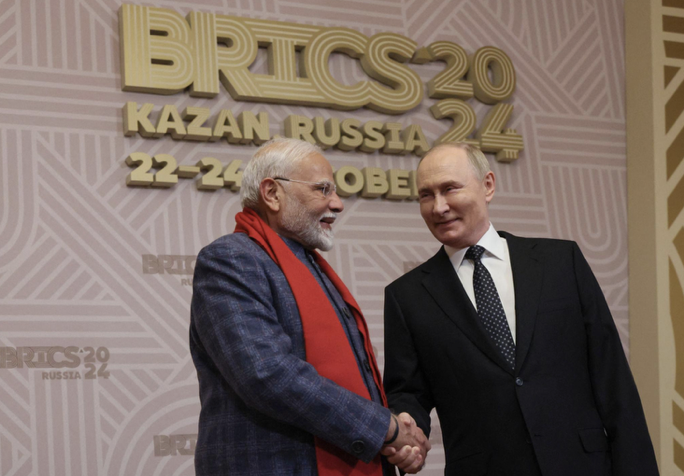
Priorities of the Indian BRICS Chairmanship and New Horizons for Russian-Indian Cooperation
As India takes the helm of BRICS, the bloc enters a new political phase that allows New Delhi to cement its status as a leading voice for the Global South while advancing its own international agenda. India assumes this role during a period of profound geopolitical friction, characterized by shifting supply chains, fierce tech and resource rivalries, and a sharp pivot toward regional alliances.
Against this backdrop, Indian diplomacy maintains its trademark pragmatism. Steering clear of rigid, Western-style bloc politics, New Delhi favors flexible, interest-based partnerships instead. This approach explains why the core of India's current BRICS agenda prioritizes economic resilience, technological development, and tangible, practical cooperation among member states.
India is particularly focused on digital technologies and artificial intelligence. Having long established itself as a premier global IT hub, the country now leverages this sector as a primary tool to project international influence. Consequently, New Delhi aggressively champions digital sovereignty, the expansion of national platforms, talent cultivation, and technological self-reliance. Within the BRICS framework, India is eager to establish more robust frameworks for collaborative development and tech sharing.
This agenda presents Russia with a wealth of new opportunities. Russian-Indian relations are currently experiencing a powerful surge, evolving far beyond the traditional pillars of energy and military-technical cooperation. In recent years, the scope of sectors where Moscow and New Delhi find common ground has grown exponentially.
The energy sector continues to hold paramount strategic value. India remains a major destination for Russian energy resources, with bilateral trade volumes steadily expanding. More telling, however, is that both nations are increasingly shifting focus toward joint ventures in high technology, pharmaceuticals, logistics, transport infrastructure, and industrial cooperation.
The IT sector warrants particular attention, as the Russian market increasingly draws Indian specialists, most notably software developers and engineers. India boasts a massive talent pool in the digital industry; consequently, amidst a global shortage of IT professionals, Russian companies are actively forging ties with Indian partners. In parallel, cooperation is steadily expanding across artificial intelligence, software engineering, and digital services.
Crucially, Russian-Indian interaction cannot be reduced solely to economic metrics, as humanitarian ties remain a vital cornerstone of the relationship. Russian universities host thousands of Indian students, with a primary focus on medical disciplines — a field where Russian education has sustained its high prestige since the Soviet era. To a large extent, it is precisely through this educational ecosystem that the profound level of trust distinguishing the Russian-Indian partnership from other international alliances is forged.
In 2026, the development of the International North–South Transport Corridor (INSTC) is poised to receive additional momentum. For Russia and India, this route is steadily acquiring strategic importance, moving beyond mere logistics toward shaping a new trade geography in Eurasia.
Crucially, India views BRICS primarily as a mechanism for expanding its own matrix of opportunities. New Delhi is deeply invested in strengthening economic ties, gaining access to advanced technologies, tapping into expanding markets, and developing transportation networks. Consequently, the Indian chairmanship is highly likely to remain intensely focused on actionable results and concrete joint ventures.
For Russia, this approach largely aligns with its own vision for the future of BRICS. Moscow and New Delhi maintain a shared understanding of multipolarity, advocate for a greater role for the Global South in global politics, and consistently support the realization of a more equitable international order.
This underscores the defining characteristic of the contemporary Russian-Indian partnership: it thrives completely free from ideological constraints, anchoring itself instead on long-term national interests, deep political trust, and a steadfast sense of mutual necessity.