How the Indian Diaspora Welcomed 2026 in Russia
The year 2026 is confidently emerging as one of the most action-packed years for Russian–Indian cultural ties in the last decade. Indian diaspora organisations in Moscow, St Petersburg, and Russia's regions have held dozens of events, ranging from diplomatic receptions to street festivals of colours. This article provides a chronicle of the main events from January to early May 2026.
The year 2026 has been declared the Year of Unity of Peoples in Russia, and the Indian community has actively engaged with this agenda.
The event-filled year opened with the "My India" festival, which took place in Moscow from 2 to 14 January. The main stage of the Hanoi-Moscow Shopping Centre hosted performances featuring Indian dance troupes from Moscow, the Moscow Region, Murmansk, Sergiyev Posad, Shchyolkovo, and other cities across the Russian Federation.
Near the end of January, Moscow celebrated India’s main national holiday – the 77th anniversary of the Republic Day of India. The celebrations took place on January 26, gathering many distinguished guests; among those invited were Sadhupriya Das, Vice-President of the Centre of Societies for Krishna Consciousness in Russia (CSKCR), and Andrey Rudenko, Deputy Minister of Foreign Affairs of the Russian Federation. In Vladivostok, the Consulate General of India organised a reception attended by Oleg Kozhemyako, Governor of the Primorsky Krai, and Andrey Brik, Chairman of the Vladivostok City Duma. This gesture highlighted the significance of the Indian diaspora in the Far East, where many Indian students and specialists work in IT and logistics. The programme featured excursions, lectures, and masterclasses. Several Russian museums participated in the project, including the Hermitage, the State Museum of Oriental Art, and the Andrey Rublev Museum.
One of the standout events was the exhibition "India: The Fabric of Time", held in Moscow from 23 December 2025 to 12 April 2026. It featured over 300 exhibits from the National Crafts Museum in Delhi, including sarees, hand embroidery, wedding veils from Punjab, and other traditional attire.
In February, Nizhny Novgorod hosted the landmark "Indian Night" festival, bringing together more than 300 participants from both nations. During the event, Russian and Indian students showcased their own original choreography, immersing the audience in traditional Eastern culture.
From 27 to 28 March, Yekaterinburg hosted its inaugural Indian Film Festival, organised by the Consulate General of India in the capital of the Urals. The Yeltsin Centre screened films by Oscar winner Satyajit Ray: Joi Baba Felunath, Mahanagar, Nayak, and Charulata. The festival also featured a photography exhibition by renowned Indian photographer Nemai Ghosh, famous for his long-standing collaboration with the great director.
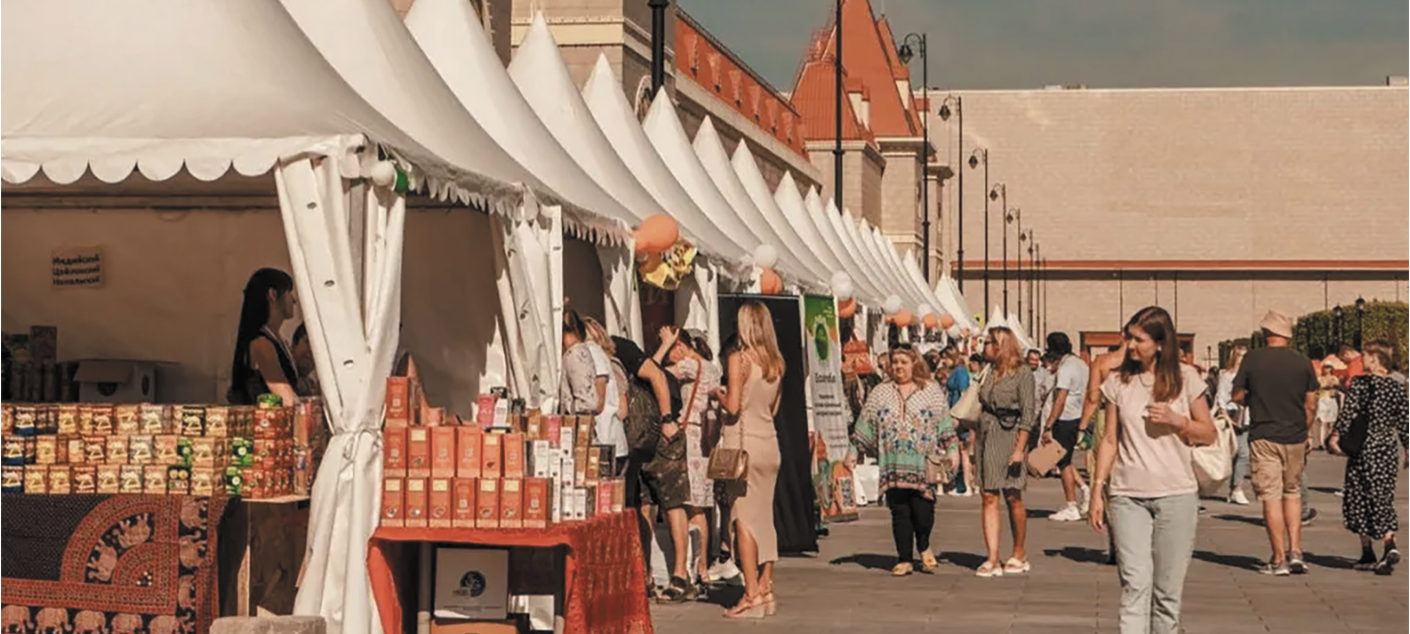
In April, Moscow hosted the 18th annual "Sita Holi Mela" festival, organised by the Sita Indian Cultural Centre. The event became an absolute highlight of the first half of the year. Throughout the day, dance troupes competed across three categories: classical Indian dance, folk dance, and Bollywood-style performances, with all participants later taking the stage for a gala concert. The event also featured an Indian bazaar and a food zone serving authentic Indian cuisine. The festival concluded with the traditional Holi festival of colours. Among the honoured guests at the event were Deputy Chief of Mission at the Embassy of India in Moscow Nikhilesh Giri; President of the Indian Cultural-National Centre “Sita” and President of the Indian Business Alliance Sammy Kotwani; and President of the Association of Workers of Children’s Creativity and organiser of the International Children’s Creative Games of the BRICS countries Mikhail Sokolov, among others.
In the first half of May, Kalmykia hosted the Days of Indian Culture. The three-day programme included performances by Indian dancers, yoga sessions led by masters from India, cultural masterclasses, a concert programme, a cricket tournament, as well as an Indian Film Festival. During the latter, the films Humans in the Loop, Bara Badhu (Bride and Groom), and Taare Zameen Par (Like Stars on Earth) were screened.
The past six months have shown that the Indian diaspora in Russia has moved towards a more systematic and organised approach, as reflected both in the status of the invited guests and the scale of the audiences, as well as in the geographical reach of the events. This once again demonstrates that Indians in Russia are not merely guests, but an integral part of our multinational society.
The next five months of 2026 promise to be no less eventful. The main piece of advice for Russian readers is to keep an eye on the programmes of the Embassy and cultural centres — attending Holi celebrations or a sitar concert even once is far more rewarding than reading about them ten times in the news.